January 22, 2009

LDNTwestival work progressing

Twestival 2009 will be taking place on 12th February. Taking a huge leap to global level – it’s taking place in over 100 cities around the world across 5 continents, the event promises to be one of the most hotly anticipated social media events this year.

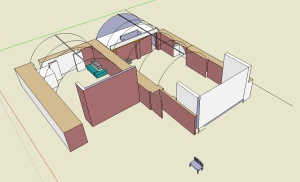
Pleased to be involved in the event, my technical services company – GPSLighting Limited has been asked to supply the services for the event. This means we’ll be designing and providing the lighting, sound and video content. Just to give you an idea, here are some renderings and ideas for the venue, Shoreditch Studios, so far:-

A google sketch up rendering of the LDNTwestival venue

rendering of the venue, using google sketchup

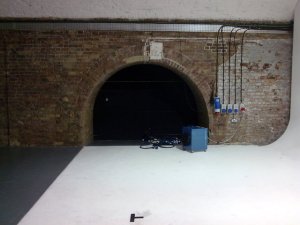
The main archway between the two main railway arch studios

The main archway between the two main railway arch studios

this is what it will look like with the lighting

this is what it will look like with the lighting

Already receiving good coverage and ticket sales flying, the festival promises to raise money for a good cause Charity:Water and at the same time getting a load of social media/cyber tweeple (twitter users) together for a good old shin-dig/knees-up/partaaaay.

December 8, 2008

can you imagine that imagine this has closed? i can

And so it’s casualty number… I’ve lost count. Can you just imagine that “A rare entity in the West End, Imagine This is an entirely new musical, neither based on a book, film or back catalogue of music nor transferred from Broadway,” (Society of London Theatre) will be closing barely a month after it officially opened? Of course not – all the signs point to its timely death.

The making of this show was very, very brave indeed. Firstly, to take a show with no proof of success on any other platform – it’s not even relatively unheard of; nobody had any idea what it was at all! From the off, they were up against it and only a truly unique and expertly executed marketing and advertising campaign was going to drive 960 bums onto their seat, night after night. Merely the show’s first challenge was hard enough, and when it opened, it became a whole lot tougher.

The critics gave ‘mixed’ reviews. The truth is that in these challenging, credit crunching, dark and gloomy times, a subject matter such as the Holocaust would have to carry an unbelievably amazing show around it. Nobody really wants to go and see a show that was constantly being defended by its director and producers as having inappropriate subject matter. Although there were said to be some great performances individually it and looked spectacular – it “received four nominations for the Whatsonstage Theatregoers’ Choice Awards, where it is featured in the Best Actress In A Musical, Best Supporting Actor In A Musical, Best New Musical and Best Set Design categories.” (Society of London Theatre), the content of the musical never pulled through, and thus it heads towards its inevitable sleepy time.

In the recent aftermath, the producer, Beth Trachtenberg, has taken a swipe at the media: “Fundamentally I do not think the critics should be making a moral judgement over the subject matter.” But as Matt Wolf, in his Guardian blog, has quite rightly pointed out, it’s kind of their jobs – “But isn’t one of the very aims of criticism to assess work not just aesthetically but morally?” As many a debate has continued about the role of theatre critics in today’s ever advancing web 2.0 world.

Yet again, I see all the fuss about reviews being far too much valued, when in truth, the power of the people is the actual and honest assessment of any modern production. The producers had such aplomb about the show, – “I’ve witnessed the public’s response to the show that is directly opposed to a narrow-minded critical belief that musicals are limited in their emotional impact” (The Stage) – however, it does appear that the emotion is only arousing the public so deep – and any decent theatre maker knows well enough that this only a touch on what constitutes a successful show.

I should point out that I feel it is hugely encouraging and extremely self-respecting that the production company – Beth Trachtenberg, Shuki Levy, Anita Mann and Icw Productions, have taken on such a courageous production and have been fully behind it. It was a mammoth task in trying to stir success in the New London Theatre (which I think has become the backend of West End theatres with its extremely dated 70s architecture – no show has been truly successful since Cats was there for 21 years) especially without any previous tested ground. A ‘rare entity’ is a bit of an understatement to be fair.

But another example has been set of how not to head to the West End with a huge production. It was hardly an experiment, because I could have commended it more for this, and so the forgotten past it will now become – very much the extreme opposite of what the show was actually all about. Let’s just hope that the big time producers out there can pinch themselves once again and it isn’t another victim of its own peril.

December 4, 2008

did the brickbats in cyberspace mean anything?

As you saw the other day, I blogged, among others, about the importance of a conference taking place on Monday evening. When I first heard about it I was overjoyed that, finally, something formal and serious was taking place to discuss the issues of how blogging is changing the theatre landscape.

Although actually I couldn’t attend, I was able to stream it over the internet and catch word and thus be in touch with my peers about all the relevant debates that cropped up over the short period. It was encouraging to see institutions so highly regarded such as The Telegraph, The Guardian, Complicite and other bloggers were casting their view, in public, on what is and can hugely affect so many theatre makers’ lives. The white doves were finally being released – hurrah! Finally being released into just a bigger room?

Since the inaugural event, I have seen very little coverage of the goings on of that evening. For the past two days, other known theatre bloggers @LondonTheatre @Dramagirl @MattBoothman and I have been Twittering away over who said what, why and where and how this is all a vast step in the right direction. But as far as I’m aware, that’s about it.

Searching both the Guardian and Telegraph site, I could find no information about ‘Brickbats in Cyberspace‘ and by certainly no means a blog. It’s only been talked about and covered by a couple of us and in this way it leaves me feeling so disappointed. Perhaps what was discussed and what came out of it, is in fact so far behind the rest of the web 2.0 world that it won’t make any press at all. Perhaps the academics who were present can take their research away and file it into a thesis that no will really ever read.

I found everything that was discussed fascinating over the short time and took a great deal from it. Although a lot was stating the obvious – more voices is better for all, for example – it was still good to hear it in public, at a formal evening, from respected contributors in their fields and in front of spectators who do this stuff everyday too. It was a real sharing and passing on of ideas and information, but yet again, this information lacks the true freedom that new media and, in particular, the internet has been striving to achieve.

If the Brickbats of these institutions are prepared to debate their views on such vital subjects then great – but won’t they please stick their necks on the line a little bit and voice it in a wider sense of the world?

It has dawned on me how much harder we, as theatre bloggers, have to work in order to make ourselves known to the theatre world. Our understanding and engagement of critical theatre is plausible, identifiable and both constructive and supportive because no matter what we say, it is for the everyday good of theatre and helping it to stay alive. It is a cliché to use ‘no press is bad press’ but it still rides here in the sense that our coverage is adding every little bit – we just want everyone else to come and indulge in the coverage of theatre and the arts too and that includes great conferences such as that on Monday night.

December 3, 2008

looking into the future – some points of interest

Having a good old fashioned browse of the t’internet and also after receiving some items in my Google Reader I thought I couldn’t specifically blog about them all, so I decided to compile a list for all you theatrephiles to take a look at for yourselves. Click the links to take you there:-

  • A TV channel specifically about theatre – Theatreland.tv – Particularly interesting for the future of Theatre and the Internet and providing good quality content rather than a load of YouTube videos.
  • Boris Johnson has pledged further support for the arts and culture industry. Notably the funding running in tandem with the 2012 Olympic games.
  • The Creator’s of South Park and Avenue Q composer have teamed up to write a musical titled “Mormon Musical“. Although it won’t be over here for a while, it’s certainly something to keep an eye on.
  • The Credit Crunch has possibly been the most used word of 2008. Obviously affecting everyone but how will affect theatre and the arts? In a lot of ways of course, but here are some solutions.

There’s a few things to look out for in the coming months. Let me know your thoughts on any of them and how they will/have affected you. Enjoy!

December 2, 2008

the owl vs the internet

An incredibly funny and original sketch which formed part of Pappy’s Fun Club: Funergy show, at this year’s Edinburgh Fringe was something that came into fruition quite clearly last night. Many of you are aware of the classic argument which has been thrown back and forth between Print and Digital media many a time over the past few years, but finally it was Theatre’s turn to have its say.

HARC: Brickbats in Cyberspace hosted at The Royal Court Theatre, gave a more formal insight into Theatre and the Art’s stance on the whole situation posing the question of How blogging is changing the landscape of theatre criticism in London and beyond.

Contributing panellists were Charles Spencer, lead theatre critic for The Daily Telegraph; Andrew Dickson, arts editor for guardian.co.uk, Judith Dimant, producer of Complicite, and leading bloggers and theatre professionals.

Spencer fluttered about like the Owl arguing that there is a “watering down of serious critical discourse” and that bloggers are a threat to critics jobs. Very much apparent over in the US, he argued, and not so much here but certainly a real danger. What about critics being a threat to theatre maker’s jobs? Surely he, of all people, would understand the cutthroat world of the Entertainments and Arts industry and finally the dog was biting back?

Dickson sat on the fence a fair bit accepting his stance as a contributor through default – even though he contributes himself, he is the editor and therefore he also commissions others and here encourages blogging to its full potential. He then nicely balances along the fence by pointing out that blogging isn’t a potential threat to print media “as long as the newspapers are aware.” and that newspapers are “not actually sacking people because of bloggers but because of other stuff.” But all the while agreeing with Spencer that theatre critique should be of a high standard and readable.

Dimant pitched here flagging up and using Complicite as concrete examples, particularly a success story in Michigan where they were relatively unheard of but sold out of eight nights, after the first night showing. This is the raw power that not just word of mouth, but blogging can achieve. Of course the quality of the work, such is Complicite’s, has to be there for it to strive to achieve any kind of success at all.

At this point it was outweighed in favour of blogging and certainly where my stance is too. The fact that so many people can interact and communicate and share their views with each other through a freedom of different mediums is always a positive thing. With the steady decline of the existence and coverage of the arts over the past century, blogging and web 2.0 can only help to move forward the current trend of theatre making and seeing.

These arguments are backed up by both Dimant and Dickson. Dimant adding that the “existence of blogging helps people to participate, interact [and gives] a sense of community”.

Other thoughts that were pointed out and I thought were worth drawing attention to whilst streaming the discussion:-

  • Blogging in danger of jeopardising quality and content because you become traffic hungry and become obsessed by the clicks – I know I sometimes feel like this.
  • The article should be of a good quality and readable even if the reader doesn’t intend to go and see the show – in response I write that much of theatre blogging isn’t actually about a show yet we still read it. I certainly try to write with that appeal whether I achieve it or not – don’t we all?
  • Matt Boothman makes an incredibly important point, quite rightly – How is criticism supposed to evolve and find a place in the media as it exists today, if its biggest names think blogging is the enemy? Referring to Dickson here, and what of the likes of Billington and co.?

There was so much discussed in these two short hours and I’d love to go into deep and lengthy discussion about it all, but nevertheless it is encouraging that it has taken place and hopefully is the can of worms that was in desperation of opening.

Obviously I’m completely in favour of blogging as the opportunity for critique, discussion, interaction, community etc can only strengthen what we know and understand about theatre – but ultimately, it all has to be seriously engaged with by taking on board and when being transferred from page to stage. After all, the stage is what it is all about.


December 1, 2008

out of the summer of hibernation… i’m back

uh hullo

Uh hullo.” Matthews clambers up onto his chair shielding his eyes from the blinding light casting out of the computer screen.

“This is going to be hard work” he thought. “It’s been a very long time since I’ve done any blogging. It could be a bit of a brain and finger strain. But no! It doesn’t have to be. With a little bit of patience and perseverance I can be well and truly back in the blogosphere.”

Yes that’s right, I’m back. After a long time in Edinburgh and taking up a job as a touring stage manager for the past few months, I’m now back on home soil. With another year of wisdom (I had my birthday two weeks ago) I’m ready, once again, to cast my thoughts and opinions about the theatre world at large.

As always, I welcome your thoughts and comments in anything I write. Please do also add me on Twitter – @sandym0, another place where I will endeavour to bridge the ever elusive gap between cyberspace and theatre.

But enough babbling on for now, there’s an important event taking place tonight, which I simply must catch to have any hope of forming my ideas back on Until Further Notice.

August 8, 2008

get a sweet tooth for Suttie

Ah, so sweet – like being in a children’s sweet shop. You could pick and choose your favourite jokes and gags and get through the whole show that way. But it was much better than that I assure you.

Isy Suttie, famed for her appearances as Dobbie in Channel 4’s Peep Show, has a steam roller of a delivery which suits the material very well. It draws upon childhood memories and following your dreams – the latter being a very catchy song because the sing-a-long takes place.

It’s an open and “honest” account with a real mountain of thought which is plied with a feeling of irony, leaving you feeling both nostalgic and warm and gooey like the inside of a bubbaloo – isn’t that nice!

Yes, Suttie is incredibly like-able with smiles, giggles and snorts throughout, if that’s your sort of thing. The show takes a sketch form rather than a journey but the theme is strong and pulls it all together.

At times, the characters felt forced but the playfulness makes it more justified and the genius songs accompany very well. Melody’s’ song about following your heart is a particular highlight; it’s over the top and dry, much like the rest of the show.

Suttie screams incredible presence and her audience connection makes her the adorable child she tells the stories of. Although, in places, it was bordering on the cliché, I feel her experience will shine through and certainly make her one to watch for the future.

August 4, 2008

pappy’s is primetime genius

For today’s blog, I’m not going to beat around the bush but get straight into it. I saw a sketch comedy called ‘Pappy’s Fun Club’ and the show is a prime example for my blog – what theatre should be about.

The show tells the story of four fun-loving friends and their adventures in the club that is overlooked by a guy called Pappy. Brendon, Matthew, Ben and Tom (in no particular order) play a multitude of parts, each with a few props and costume changes to tell the story of how Pappy will pull the plug on their club unless they can find a more environmentally friendly way of powering it.

Through several mediums, ‘Funergy’ is the idea that they come up with, but just how they do it is where the journey really takes its course and also the reason why you’ll have to go and see it.

It’s an all round enriching and beautiful tale at the heart of it and it’s the smattering of pure genius comedy which keeps it flowing and inevitably holds the piece together.

As a piece technically, it has to be placed under a microscope to find any faults. The pace of the four performers is undeniably expert and you find yourself envying their talents at many times. They know the show so well that it becomes playful and engaging yet they manage to somehow place the audience at the centre of it through their over-the-top but honest and personal delivery.

If the technical aspects aren’t enough, then the writing undoubtedly adds to the strength of this piece. Even though it’s sketch, each sketch has a strong correlation and each part lends itself to one another completing a nicely rounded piece which leaves you feeling incredibly satisfied. The cyclical storytelling ensures that no prop, song, gesture, word or thought is unnecessary and that’s exactly what we want to see in a piece of theatre.

As I said before, if not for the comedy, see this show on the simple basis that it is a great piece of theatre and something that we should all aim for.

Pappy’s Fun Club – ‘Funergy’ is on at 6.40pm at the Cabaret Bar, Pleasance Courtyard – Venue No. 33.

July 30, 2008

the almost edinburgh festival

Those of you who have been to Edinburgh not during the festival (quite rare, I know) will have undoubtedly noticed the difference between an Edinburgh rush hour and a London rush hour. In London, Bendy Busses are squishing cyclists and pedestrians like tropical bugs and Black Cab drivers are taking road rage to a whole new level.

Edinburgh is a breeze of a metropolis. Queues at traffic lights are an average of three cars. Cyclists and buses treat each other with utmost of British respect creating a striking harmony and pedestrians obey the crossings like children watching Finding Nemo.

However, all has change. The ‘Festival Rush Hour’ is ongoing daily. Cars have loaded into the city in large convoys, bus stops are becoming a haven for petty crime between tourists and blue-rinsed old ladies and cyclists are obeying the traffic laws as it’s becoming more like ‘Tour de Ed.’

They say during the festival the town population doubles, and although it hasn’t quite reached that level yet, it’s certainly well on its way.

Technical rehearsals have been in full swing and running like clockwork. I have small theory that the sun and risen population haven working in tandem to lift and burn off the dense fog that’s been plaguing for the past couple of days (although, I very much doubt bikini sales are going to jump up – one can only dream of such things).

So, bring on the punters! Things are nicely slotting into place – metaphorically and literally as every sizeable building in Edinburgh completely transforms. Every other shop front has been bombarded with posters so it’s mini challenge in itself trying to work out what the shop actually sells. The restaurants, cafes, and other such eateries are doubling their stock as queues file out of the doorways – soon to expand even further.

Today being the first day of previews, it’s almost all in place. Almost being the keyword because as long as the tickets keep on selling with streams of paper to be printed on, then the almost will gradually fade away just as the fog has upon Arthur’s Seat.

July 27, 2008

bums on seats or a bit bummed out?

Yes I know it’s been a week, but what a week it’s been. Tough, grinding, fun, long, tiring, sweating and smelling, lifting and shifting, building, scaffing, painting, sticking and eating (of course you have to eat during all this!) are just a handful of some of the verbs and adjectives that could describe the last days.

The mass of staff arrived yesterday to lift spirits and blaze through what still had to be worked on. There is still a vast amount to be done but what has been achieved is both amazing and overwhelming at the same time. Things have certainly fallen into place nicely and now it’s time to move onto the next stage of the Edinburgh festival – the company arrivals.

From tomorrow, the long and laborious, but extremely essential work takes place with setting up the productions in each of the venues. These next few days are a crucial and pivotal point during the festival duration and for many people are the potential make and break of their time here. There will be tears and tantrums all over the shop with ego clashes a-plenty but then what would the arts festival be without them?

This is, of course, a very false picture that I’m painting of how the work will go because, in fact, it will be more first class teamwork to put the finishing touches to these shows and make them all look, sound and feel amazing. I will very much be involved in this process and will be knee deep in much deliberation of sorting the shows out and this is where the next phase of my quest will begin. I’ll be finding out why exactly the companies invest their long and hard earned cash to come to the place where the average audience attendance is just three.

The Edinburgh Festival Fringe, the official organisers for the fringe festival, give their opinion on why performers should come to the festival:-

You will not only face competition for an audience from around 1,800 different Fringe shows but also from the Edinburgh International, Film, Book and Jazz Festivals, plus the Edinburgh Military Tattoo. So although many people travel to what is generically known as the ‘Edinburgh Festival’ there are many things to distract them from buying a ticket for your show. In addition, the costs of hiring a venue, travel, accommodation, publicity material, etc mount up quickly.

However, financial gain isn’t the number one reason to come to Edinburgh. Most performers come to the Fringe as an asset for their future careers. The Fringe is well-known for springboarding people’s careers, providing numerous opportunities for networking, and ‘fast-track’ learning some tricks of the trade from other performers from all across the globe.

As obvious as this may seem, it is the latter paragraph that is so blindingly true and something that runs across the fringe platform no matter where you are in the world. This is what makes the arts so good because it is consistently like this. However, this doesn’t satisfy my appetite enough and so I want to see the rabbit hole go further and receive a much wider perspective on why Edinburgh exists as it does today.

July 20, 2008

many hands make lights work

It’s all going. Everything‘s kicking off. The trucks have arrived and been unloaded and there’s still more to come. Plenty of bodies are grinding away getting the prep work for the venues done. It’s not quite full swing just yet, as the mass of workforce don’t arrive until Saturday but it’s certainly going.

In my last post, I posed the question about why the Edinburgh festival has become what it has become. The world’s largest arts festival doesn’t just pop up in a few years – Rome wasn’t built in a day, you know! Year after year, the staff, companies and punters (in that order) all trek up to bonnie Scotland to basically have one big fat arts party and kick some cultural butt.

Speaking to some of my colleagues, I managed to get a real understanding of why some of the people came. For example, one person, among many I’m sure, could have taken approximately five days of site work and earned twice the money that you would in Edinburgh. Granted, everyone knows that the money isn’t great, and certainly not the reason why people come. However, the five days, basically corporate work, that he would have taken on wouldn’t have had anywhere near the amount of interest, spontaneity, diversity and shear passion for theatre and the arts as here. It’s incredibly fulfilling and by far beats most corporate work, no matter what the money.

Respectively, there are others who don’t have the skills and experience to be able to take a large money job at the moment. There are many students helping run the festival where the opportunity will, without a doubt, further their skills and experience for higher profile work later in their careers. I certainly have come to Edinburgh for this reason as one of many. I’ve been here less than two days and already learning a vast amount.

To give you an idea, 90% of the venues across the site’s are not purpose built theatres – far from it, in fact. They have to built from scratch to a highly professional specification. Everything from the lighting, sound, seating rig, stage, floor, drapes and fire exit signs are built in each venue which takes a great amount of effort. Take a look at the photos for some evidence of how they being to shape up. But as I said before, as you learn whilst doing this it, makes it a truly invaluable experience.

That’s the rough progress report so far and also a bit of reasoning behind how and why the festival takes place. As it continues and I digress over a beer with my colleagues and others, I’ll discover more of the many reasons why Edinburgh exists as it does.

July 19, 2008

what makes the festival so special?

I think it would be an appropriate time to fill in on the journey so far. When I say journey I mean that literally as I write this from my somewhat comfortable train chair. The landmark wheel in York seems like a justified halfway point with a fairly eventful journey – actually hardly at all, apart from the hen-do rabble of chirping chicks boarding at Doncaster making it a livelier affair (there’s goes the bubbly!). Last year’s journey didn’t have the luxury of Wi-Fi, thus showing the importance of this route from the hub of London to arguably centre point of Scotland’s urban landscape.

At this point, I haven’t spotted any fellow potential Edfest –ites, –onians or –evians. I’m trying to work out what most other people have as the purpose for their journey. Not to be patronising that Edinburgh only functions for the festival – anything but. Although, naturally, the festival is the most popular time with the Scottish capital’s population doubling during August.

During the time so far, apart from compiling my networking for the festival’s coverage, I’ve had a flick through the Fringe brochure to see what I could spot for the potential must-sees (bit of an oxy-moron but oh well). I’m halfway through and have so far noted The Terrible Infants with their “new, extended version”, Mark Watson trying to fill a massive auditorium and Obong – Akwa-Cross-River Dance Company which I’m billing as the replacement for last year’s Tom Tom Club.

Don’t worry; I’ll compile the results of a more thorough examination some time later on, for you UFN readers to see.

For now, the journey is to be enjoyed and a question mulled over – what is it exactly about the Edinburgh festival that has made it grown into the world’s largest arts festival? Is it perhaps the size, layout and geographical location of the city? Or the number of suitable and potential venues to facilitate rapid growth? Or even the mix of tourist attractions to help bums on seats? Whatever it is, the specialty of it all has got me coming back for another year and I know there’s nothing else to beat it.

July 18, 2008

u.f.n. goes to edinburgh

As we head towards the end of the month where it is meant to be the peak of the summer, I can only hope it’s an Indian summer where it peaks next month instead, and a bit further north because that’s where I’ll be. As London gets too hot and sticky to be spending hours in black boxes with programmes for temporary fans, theatre land recesses to the far north in a place called Edinburgh. I don’t know if you’ve heard of it?

For those of you who have, but can’t make the journey due to other rubbish commitments, then rest assured that UFN will be providing some very insightful coverage. The best way to see the festival (any festival) is to work there and that’s exactly what I’ll be doing. I actually head off tomorrow morning to get on with practically making the theatres from empty shells.

Because of my early involvement with the festival, I’ve decided that I’ll be covering the following:-

· the feel of the place before the festival

· the buzz when the performers start arriving and the dreaded technical rehearsals begin

· the all important previews to pick out the potential hits and misses

· the best rated shows to see

· good nights out and things to do other than the theatre

· where and how to spend some quiet time

At the moment that’s enough to be getting on with and more ideas will inevitably pop up as the festival commences. I hope that it can be insightful for anybody thinking of heading up and not sure what it’s going to be like and also for those who are missing out altogether.

If there’s anything you’d like me to blog that you haven’t seen or heard about, then drop me a line and I’ll see what I can do.

Please digg me, del.icio.us me, reddit me, stumble me, add me to your roll and RSS feeds et al.

To put it plainly, Until Further Notice will be casting its thoughts on what the Edinburgh Festival should be about.

In the mean time, take a look at these views on the fringe box office ticket fiasco:-

http://blogs.guardian.co.uk/theatre/2008/07/wlll_recent_chaos_bring_order.html

http://www.thestage.co.uk/news/newsstory.php/21258/booking-system-failure-causes-five-week-delay

http://edinburghnews.scotsman.com/latestnews/Fringe-drama-plunged-into-a.4201359.jp

July 15, 2008

it’s made ‘the list’ – i now hope it can unmake it

Heading back to the source of my last post – The Stage News, a new report has been released compiling a “list of England’s most endangered theatre buildings.” A new addition, amongst others to join that roll (I knew it wouldn’t be long) is the Gardner Arts Centre, Brighton. The list – compiled by the Theatres Trust, is released annually and I find it interesting that it was included shortly after I enquired about the state of the building when I spoke to some of their representatives at the ABTT conference last month.

Of course, there are many other endangered theatre buildings, far too many for a theatrephiles liking. But the reason why my biased goes towards the Gardner Arts, is because it was one of the places that helped me nurture and pioneer my first real original theatre thinking and the openness that theatre represents as a medium.

Growing up through school, musicals, straight plays and Shakespeare where the main studies of theatre known to me, and it was the GAC that positively broke down that mould. It was a place where I first learnt of Frantic Assembly and Forced Entertainment – both of which completely blew my mind open and made me ever more hungry to explore my own theatre realm. The centre attracted many renowned artists and companies to a very supportive and active Brighton theatre community which would only help further endorse theatre on the whole.

Not only did I gather many inspiring thoughts from experiencing some great work upon those boards, I also performed there myself – in a couple of musicals and a dance show. The latter is what made the GAC so appealing because of the size of its stage – it is one of the largest stages in the whole of the south of England. This added to the strength in attracting so many established companies.

Not only was the centre a thriving house for theatre and dance – being an arts centre it exhibited some fine local and further afield art works and installations as well as regularly screening films. What’s more, it provided many amateur theatre groups with an incredible space to play some fantastic productions and showcase Brighton, Sussex and the South as a leading innovator and creator of theatre and dance.

It’s now on that list, so it has been recognised as endangered which will hopefully help to turn it around and back into a prosperous and successful arts centre. Those of you who have been there will understand it is a peculiar but very spacious and welcoming building. It certainly became, in part, a home to me and somewhere I would hope to go back to as a professional theatre maker and with the right awareness and support, no doubt this can and will happen.

Read the news post from The Stage here – http://www.thestage.co.uk/news/newsstory.php/21286/new-entries-on-theatre-building-at-risk-list

July 15, 2008

big opera winds up locals in a good way

A bit of news that you may have already heard is that the opera producing powerhouse nestled down in the quaint Sussex countryside has taken its stance on helping contribute to renewable energy resources. Glyndebourne Productions Limited, as it’s officially known, managed to seek approval to “erect a 230ft high wind turbine, which will cut its carbon emissions by 70%” against some neighbours dis-approvals of East Sussex who thought it would ‘look bad – Oh, boo-hoo!

The truth is that it is another exemplary action which many other providers of first class entertainment should be aiming for. Granted, Glyndebourne has a great area of land in which to construct a renewable source of energy, nevertheless it sets a real bar – not only as a provider of world class opera but also as a leading example of how to run an establishment on renewable energy to be a sustainable provider to itself and its beautifully green surroundings.

If you are a CEO of a huge company – arts based or not – please take note!

Read the full post here from The Stage http://www.thestage.co.uk/news/newsstory.php/21250/glyndebourne-wins-battle-to-build-wind

June 30, 2008

end of an era

congratulations on graduation

In one week today, no matter how much the sun is brightly shining, it will be a dark, gloomy and miserable day. The era of “university digs” will come to an end as I go out to face the world of the dreaded council tax. Aside from this depressing thought, it is important to remember how 44 Church Street had become an absolute hub of friends and fun. Nevertheless, as I write this from my mattress on the floor in an echoey shell of a half empty room, I know that it will be sorely missed. However, dwelling will only further the pain and so, instead, I’ve decided to look back at my time at university.

The house is inhabited by the three of us – as you can see on the About page, and we all took Drama at St. Mary’s University College, Twickenham. When I was choosing, out of the many options, what course I was to take at a higher education institution, I had the decision of Drama School vs. University. Admittedly, I didn’t manage to successfully audition for drama school, although throughout the auditioning period, I did find that university seemed to suit me anyway. I like to think of myself as a theatre all rounder and uni was certainly the place to relish this aspect.

It gave me the freedom and choice to indulge in my own learning and take what i considered to be ‘true’ from uni drama department and not attempt to fit a mould. Undoubtedly, you don’t receive the intense practical skills based training – but that all depends on where you think you’ll be heading for the three years – for example, actor, director, practitioner, producer etc. – even if you know that already anyway.

Drama at St. Mary’s is currently going through a change of course phase. As a student learning in the heart of this change, I’ve seen how it has benefitted the department as a whole. As much as staffing revisions have led to some gaps – namely a world class dance tutor, there has been some largely fantastic additions which has led to the department having a clearer sense of direction.

The new course, I’ve been told, enables students with a greater promise as to what they will take from the course – unlike some of my peers, for example, not being able to take a module due to shortage of staff/students. It has also been intensified with much more contact time between teachers and students which gives the sort of time that you’d receive at a drama school.

Mark Griffin, Programme Director of Drama and Applied Theatre Arts, who has overseen the phase of the new course blogs at Drama St Mary’s where he is currently filling in on life within the department. The blog includes many examples of opportunities and general activity and the sort of community you’d be a part of. Although the new changes make it slightly more regimented, I feel it will enable prospective students to find a direction in their own learning and much faster too.

I had an amazing three years at Simms – it’s nickname and what it is affectionately known as, and if you’re currently considering drama at school or university then St Mary’s should certainly be a consideration. Their course provides a mix of the two and also the freedom to structure ones learning. For me, there was real feeling to flourish and achieve the best that I could – after all, it’s the reason why we go to university right?

June 27, 2008

who do we represent?

Speak up now

It was a late trip out and I managed to pick up a shabby daily free newspaper. Ubiquitous on London transport, they’re basically the commercial daily version of the Friday-ad, in that it is strewn with adverts trying to get you to buy from them. It’s a plus when travelling back from a theatre gig, when your phone battery is practically on its death bed, and you’ve missed Jon Snow or Krishnan Guru Murphy and that’s what article jumped out at me (not Wayne Rooney and his wonky St. George’s flag tattoo as he tries to behave like Johnny Rotten, although I did like the £1.99 McDonald’s coupons.)

Anyway, the London Lite reported that a claim has been made by a guy called Dr Samir Shah who is a non-executive director for the BBC. He’s principally stated that black and Asian people being ‘token’ represented on the box is a not a real representation.

The main point of the article was that he ‘blamed the problem on a “metropolitan, largely liberal, white, middle-class elite” for making sure ethnic minority people were on screen regardless of editorial content.’

Now, why does this sound all too familiar? I don’t think theatre can be held up as much as TV, but I do think there’s a real danger for it. I don’t mean that we shouldn’t be producing plays like Behzti, but I do feel there is a real possibility and potential chance of patronisation to be found upon the boards.

Nevertheless, I think that theatre is more culturally assure in its representation, as “editorial content”, if you can call it that, doesn’t usually take precedence when creating and so there isn’t the element of “token”. Well crafted theatre with purpose finds no compromise for this to happen.

But Shah’s other comment, and main counter movement for his stance ‘Calling for more black and Asian people to be BBC executives, he said the real positions were still filled by a “narrow culture circle”.’

Here, I couldn’t agree more. I accept that I don’t work in an executive environment, however as an outsider, I think it would be fair to find a truth behind Shah’s words.

I read the article and reflect with an awareness and analysis of the theatre of our time to not fall into this trap but to stay equal, non-patronising and true to what we want to communicate upon the stage.

There, that ain’t half bad on a midnight train to London. Who needs Jon Snow anyway, which, by the way, the reason why he isn’t reading today’s news is because he’s giving a speech at the place I’ve just been working.

June 25, 2008

don’t say a word

shhhhhhhhhhhhh

Nursing a hangover this morning, I played some gentle music, lay gently on my bed and read a gentle paper – well, The Times was the paper, but today’s edition seemed fairly gentle.

The page that I got to which gently inspired me to write today was The Daily Universal Register page; which was in fact the original name for the newspaper when it was first published in 1785. If you’ve not read it before, it’s a nice little round up of current general knowledge – On this day…, Top Ten, Going out… vs. … Staying in, etc. However, the section which most stood out was The Last Word which quoted a Spanish proverb: “Don’t speak unless you can improve on the silence.”

Apart from me thinking how last night would have been a better time to learn and use this proverb, as I sipped away a few hours of bubbly, red and beer (not mixed together) and got into many a slander about the world at large, it prompted me to think how, when creating theatre, we can learn so much from this. A vast amount of plays, nowadays, are stuffed full of language when it should really be heading in the opposite direction. I’m not saying that we should all be manufacturing The Hour We Knew Nothing Of Each Other, but I think that if the silence is there, it should be there for a reason. The audience reads so much upon the stage and that includes what’s not being said.

I know this is as clear as mud at the moment, so let me give you an example, although you may slap me on the wrist, because it is screen, where you are pretty much told what you can look at, and not stage but nevertheless – Lost in Translation is crammed with silences which communicates an unbelievable amount. The films is just as much about what is not being said as what is being said and this is the reason why I love it so much and why I feel it was so successful. It didn’t patronise the audience but made them work to fill in the blanks where each person could create their own mini episodes.

This is what theatre should be heading for and striving to achieve. The audience can be told a huge amount through the silences. Theatre needs to be created with precision and necessity and so words need to be stripped bare until this creation is achieved.

So, to round that all up: “Shut yer face and eat your humble pie.”

June 22, 2008

following the leader, the leader, the leader

Cheap - like the budgie...

One of the London’s and the UK’s leading dance houses has followed the lead of the National Theatre and introduced their own £10 ticket initiative. The inaugural Saddler’s Wells theatre, which sits pretty in the borough of Islington, will be offering audiences the chance to see some international choreographer’s debut work to the UK. The people at the Wells have so decided to call the scheme “Debut”, which is highly original and I’m sure took a great deal of pondering over.

The first company that we are lucky enough to see will be:-

“Emanuel Gat Dance, who will present Winter Voyage, Through the Centre and the UK premiere of Silent Ballet on September 19-20.”

It’s nice to see another UK flagship venue setting the bar of offering premium dance and theatre at a bargain rate, enabling a wide audience to taste some of the world’s finest. Let’s just hope we start seeing the rest of Theatreland, most notably the West End, following suit – although I wouldn’t hold your breath.

Check out these two links for more info:-

http://www.thestage.co.uk/news/newsstory.php/21054/sadlers-wells-to-offer-10-tickets

http://www.sadlerswells.com/

June 12, 2008

i’m back! with a lift

Not that kind!

After disappearing off of the radar for a little while (I had a degree to finish!), I’m back on the scene and have some things to write about (this is the part where you go “ooooooh” like a TV studio audience).

Most recent updates are that I will definitely be in Edinburgh for the festival this August. Although I’m working in a nice backstage role, I will be seeing plenty of good and bad theatre to blog.

But for now, I’m stopping by very quickly to mention LIFT 2008 – previously the London International Theatre Festival. What genius decided to swap the F and the T around?! Perhaps the London International Featre Thestival? Anyway…

It’s kicking off from today in Stratford until 21 June:-

“Lift Festival 2008 Stratford features 30 events including UK premieres from India and South Africa and local works from Canning Town and Stratford. Meet Lift International Associates, artists and local communities and join the conversation about what matters to us most.”

It then moves slightly more central to the Southbank Centre from 26 June until 6 July:-

“Lift Festival 2008 Southbank Centre presents global reports from Australia, Canada, China and New Zealand. These UK premiere performances, selected by Lift’s International Associates, are testimonies from artists and communities engaged with the issues of our time. Artists performing at Southbank Centre include The Black Arm Band (Australia), Lemi Ponifasio/MAU (New Zealand), Tara Cheyenne Performance (Canada) and Living Dance Studio (China).”

It culminates back over towards the east in Shoreditch from 16 until 24 August:-

“The Lift at Shoreditch Festival features a unique dance collaboration between ANGIKA and local troupe Ebonessence, spectacular French contemporary circus K’boum, Ragroof Theatre and a spoken-word evening produced by Apples and Snakes. The Lift will also host an intriguing world premiere event commissioned by Lift and devised by Coney.”

So take your pick from that lot. It’s nicely broken up so that you can catch it at some time or other, or if you’re hardcore and you want to see lots, you can take a break between the periods.

Here’s the link to the world wide website – http://www.liftfest.org.uk/festival.aspx – and look out for the uber cool ‘The Lift’ – “a mobile arts venue that could be raised quickly, with a flexible interior capable of hosting a range of events – from large-scale performances to intimate discussions.”

There we are. Sorry if you’ve missed this, but now my degree is out of the way I will endeavour to keep my blogs going until further notice.